

- About error "The type of the file system is RAW. CHKDSK is not available for RAW drives."
- How to Fix "CHKDSK Is Not Available for RAW Drives" Error in Two Steps?
- Frequently Asked Questions (FAQ)
There is an NTFS partition on my external disk where I store many photos and documents, the partition becomes inaccessible after I unplugged the USB device incorrectly from my computer. When I try to open it, I received the error message: "The drive is not formatted. Do you want to format it now?" After that, I tried to repair the partition file system using CHKDSK, but I got a error message saying: "The type of the file system is RAW. CHKDSK is not available for RAW drives.". Is there any way to help me fix "CHKDSK is not available for RAW drives." error and get my lost data back?
After a partition becomes a RAW partition, if we try to open the RAW partition in Windows Explorer, we will get the "The drive is not formatted. Do you want to format it now?" error prompt.
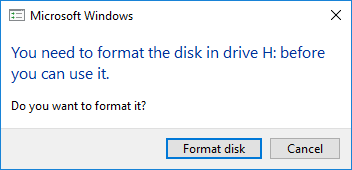
As we all know, we may lose all of the files on this partition if we choose to format this partition as prompted, so many users who are familiar with Windows will try to use CHKDSK to fix the error. Unfortunately, if you try to repair a RAW partition, CHKDSK will prompt you "The type of the file system is RAW. CHKDSK is not available for RAW drives.".
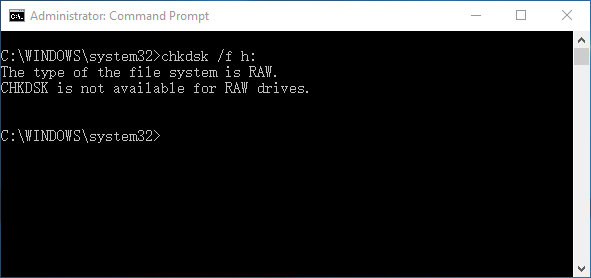
About error "The type of the file system is RAW. CHKDSK is not available for RAW drives."
RAW file system occurs when file system goes wrong, and it can't be recognized by Windows, so we will not be able to access the files on this drive. If the file system is severely damaged or corrupted, we will not be able to use CHKDSK to fix/repair this partition.
There are many reasons for the drive to become RAW drive, such as corrupted or damaged file system, corrupt partition table or MBR, unsafe ejection drive, sudden power failure, unexpected shutdown, bad sectors, virus infection, etc.
As CHKDSK can't repair RAW drive, we have to reformat the partition to reuse the space. Before that, we have to recover as much of the lost files as possible from the RAW drive, so it is important for us to find a professional RAW data recovery software. Here we recommend using Hasleo Data Recovery to recover data from a RAW drive or fix/repair "CHKDSK is not available for RAW drives." error.

How to Fix "CHKDSK Is Not Available for RAW Drives" Error in Two Steps?
First: Recover data from a RAW drive with Hasleo Data Recovery?
Hasleo Data Recovery is an all-in-one data recovery solution that allows you to recovery lost data from various RAW hard drives, including RAW external hard drives, RAW USB flash drives, RAW SD cards, RAW memory cards. It is the best RAW data recovery software.
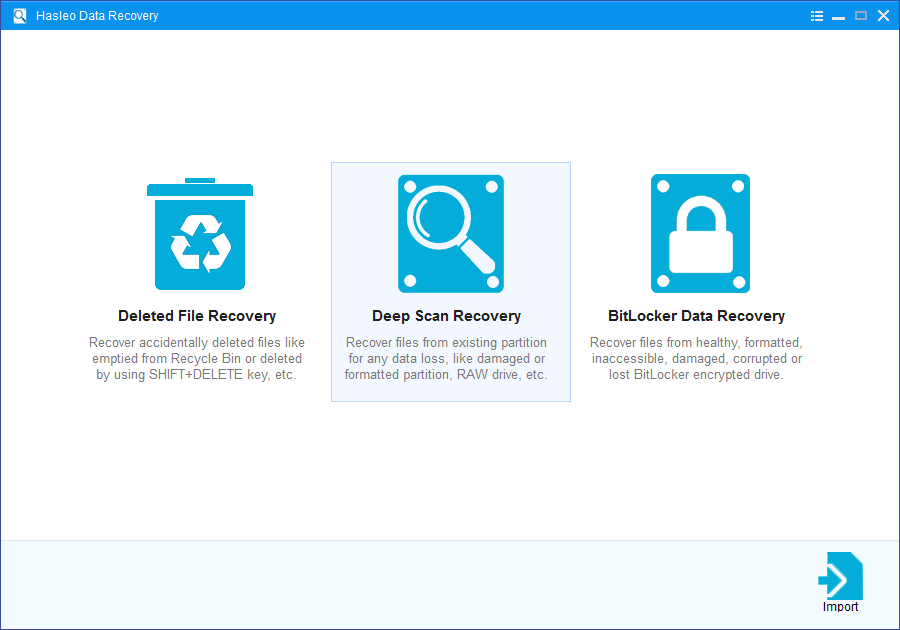
Step 1: Choose Deep Scan Recovery
Download, install and run Hasleo Data Recovery. On the main interface, you will see three recovery modes. Please select Deep Scan Recovery mode.
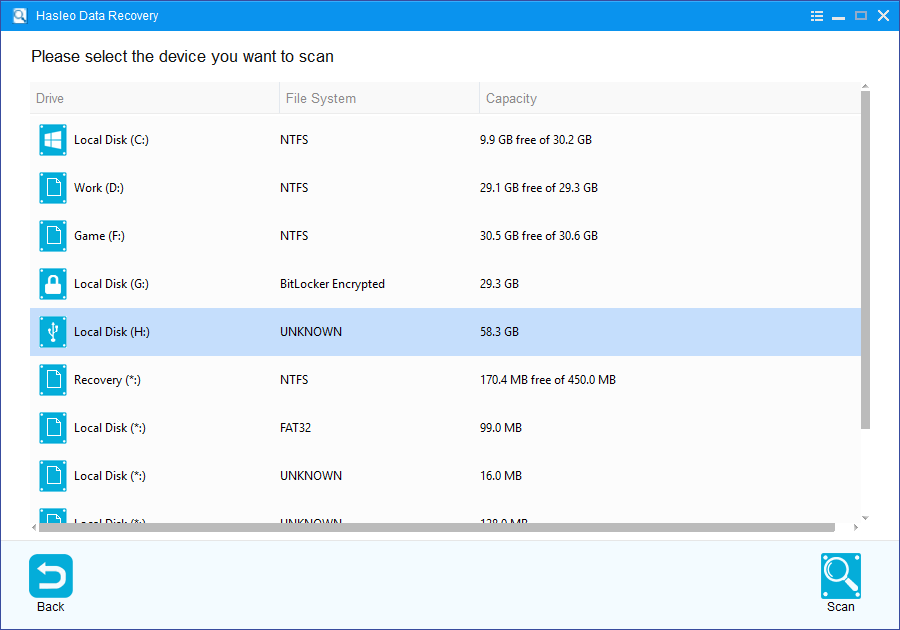
Step 2: Select the RAW USB Flash Drive to Scan
Select the RAW drive where you lost your files and let the software scan it. The scanning time depends on the drive's capacity.
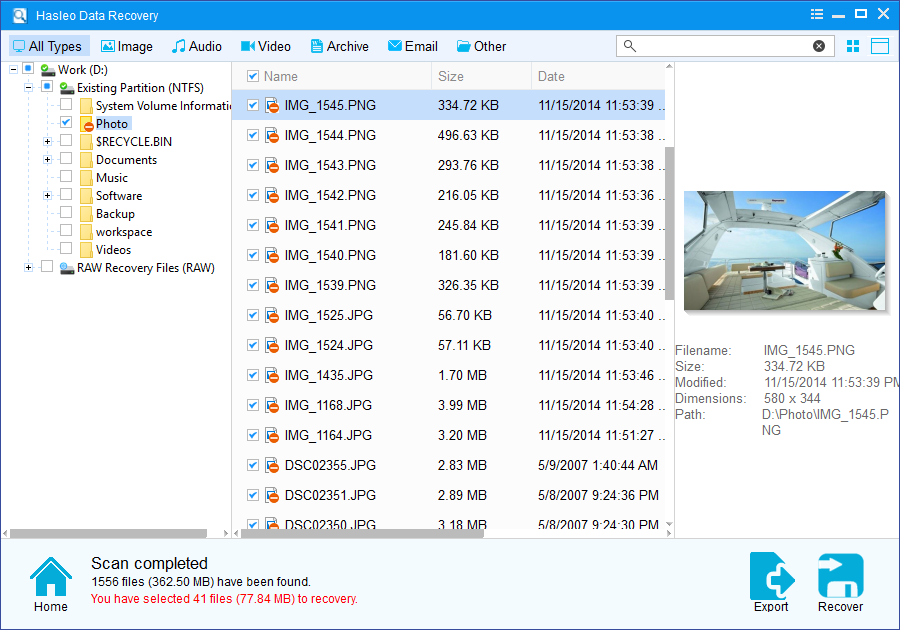
Step 3: Preview and Recover Deleted Files
You can preview some files and then you can choose all needed files to recover.
Important Notes:
- If the device you want to recover data from is encrypted by BitLocker Drive Encryption, you should try BitLocker Data Recovery.
- Do not save recovered files to the original partition where the lost data was stored. This prevents the data from being overwritten.
- You can export or save the scan results for later use or future recovery sessions.
Second: Format the RAW Partition After Data Recovery
After successfully recovering your lost data, you can reformat the RAW partition as needed. You can format the RAW partition as FAT, exFat or NTFS, the "The type of the file system is RAW. CHKDSK is not available for RAW drives." error will be fixed after format completes.
Step 1: Right-click the RAW drive in Windows Explorer or Disk Management.
Step 2: Select "Format..." from the context menu.
Step 3: Enter the desired partition parameters (file system, allocation unit size, volume label), then click "Start" to begin formatting.
Frequently Asked Questions (FAQ)
A: CHKDSK cannot repair RAW drives because RAW means the file system is unrecognizable to Windows. CHKDSK relies on the file system metadata to repair it, but when the file system is corrupted or missing entirely, CHKDSK has nothing to work with and therefore displays this error.
A: Common causes include corrupted or damaged file systems, corrupted partition table or MBR, unsafe ejection of drives, sudden power failure, unexpected shutdown, bad sectors, and virus infections. These issues prevent Windows from recognizing the file system on the drive.
A: Yes, you can recover data from a RAW drive using data recovery software like Hasleo Data Recovery before formatting. Simply select Deep Scan Recovery mode, scan the RAW drive, preview the found files, and recover them to a safe location before formatting.
A: Yes, formatting will permanently delete all data on the RAW drive. This is why it's crucial to use data recovery software to retrieve your files first. Only format after you have successfully recovered the data you need.
A: Since CHKDSK cannot repair RAW drives, you need to format the partition to fix the error. First, use Hasleo Data Recovery to recover your data from the RAW drive. Then, format the partition as FAT, exFAT, or NTFS using Windows Explorer or Disk Management to resolve the error.
Related Articles
- How to Recover Data from a RAW USB Flash Drive?
- How to Recover Deleted/Lost Files From BitLocker Encrypted Drive?
- How to recover a deleted or lost Bitlocker encrypted partition?
- How to recover data from accidentally formatted BitLocker encrypted drive?
- How to recover deleted/lost files from BitLocker To Go encrypted USB flash drive?
- How to recover lost files after upgrading to Windows 10 form Windows 7/8/8.1?
- How to Recover Deleted/Lost Files from SD Card?
- How to Recover Deleted/Lost Files from USB flash drive?
- How to recover data from external hard drive?
- How to recover data from corrupted/damaged BitLocker encrypted external hard drive?


